Otodontidae
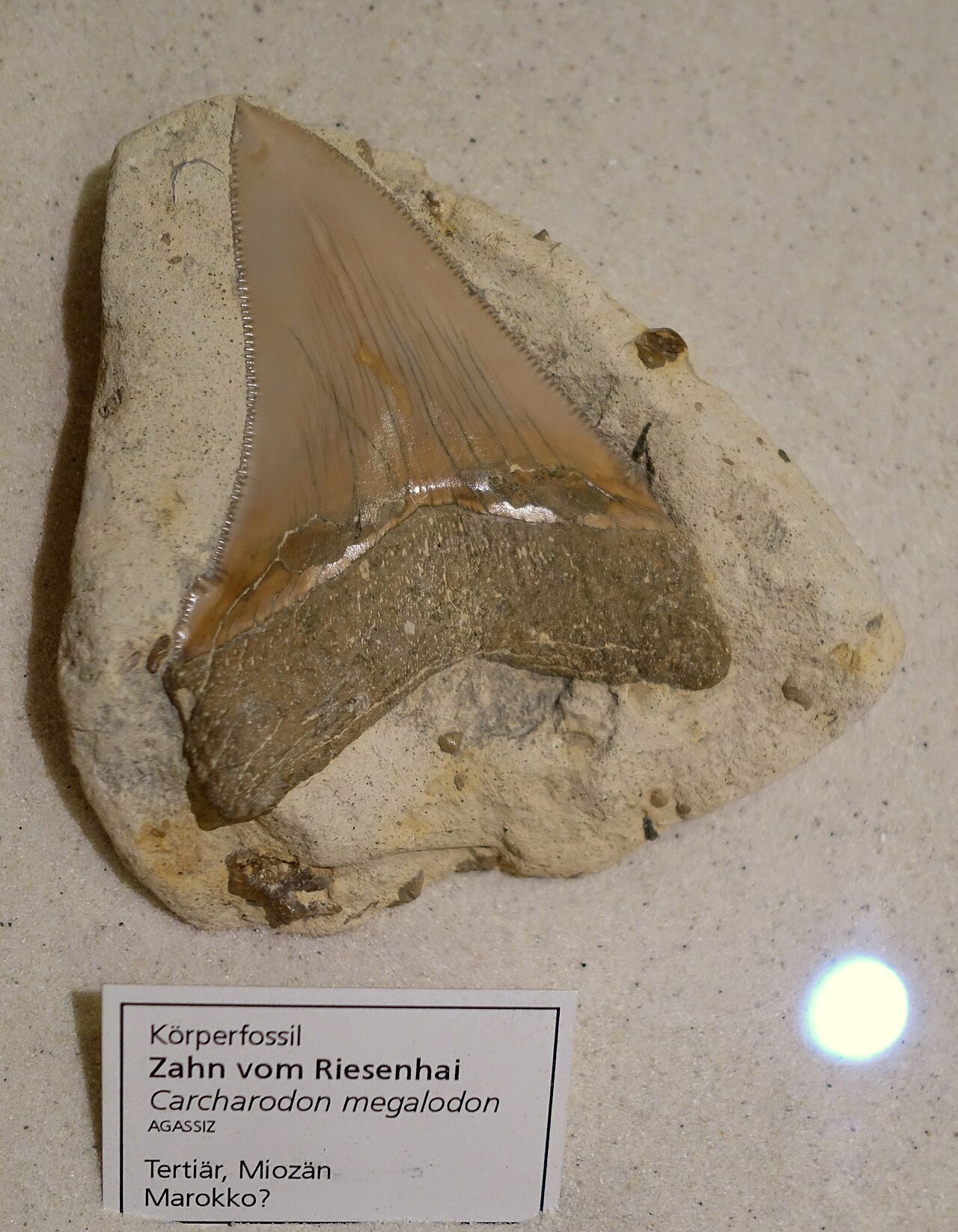
Otodus megalodon
Megalodon
MiocenePliocenetrophy
The undisputed king of fossil teeth. Reached an estimated 50–60 feet long and ruled coastal seas worldwide for 20 million years before vanishing in the Pliocene. A complete 5"+ tooth is the find of a lifetime.
Typical size
3–6″
Trophy size
6.5″+
Age range
5.3–5.3 Ma
Body length
50–60 ft
How to ID it in the field
- ▸Massive heart-shaped silhouette with a thick, broad triangular blade
- ▸Fine, even serrations all the way to the tip — feel them with a fingernail
- ▸Bourlette (chevron-shaped band) at the base of the enamel above the root
- ▸Root is wide, bilobed, often with a slight V-notch
- ▸Anything over 4" is significant; 6"+ is museum class
Quick reference
Shape
broad triangle
Serrations
fine
Cusplets
none
Root
broad bilobed
Color
Charcoal to gunmetal; cream to honey roots
Sample reference images
Use these visual references to compare angle, wear, and silhouette before making a final ID.
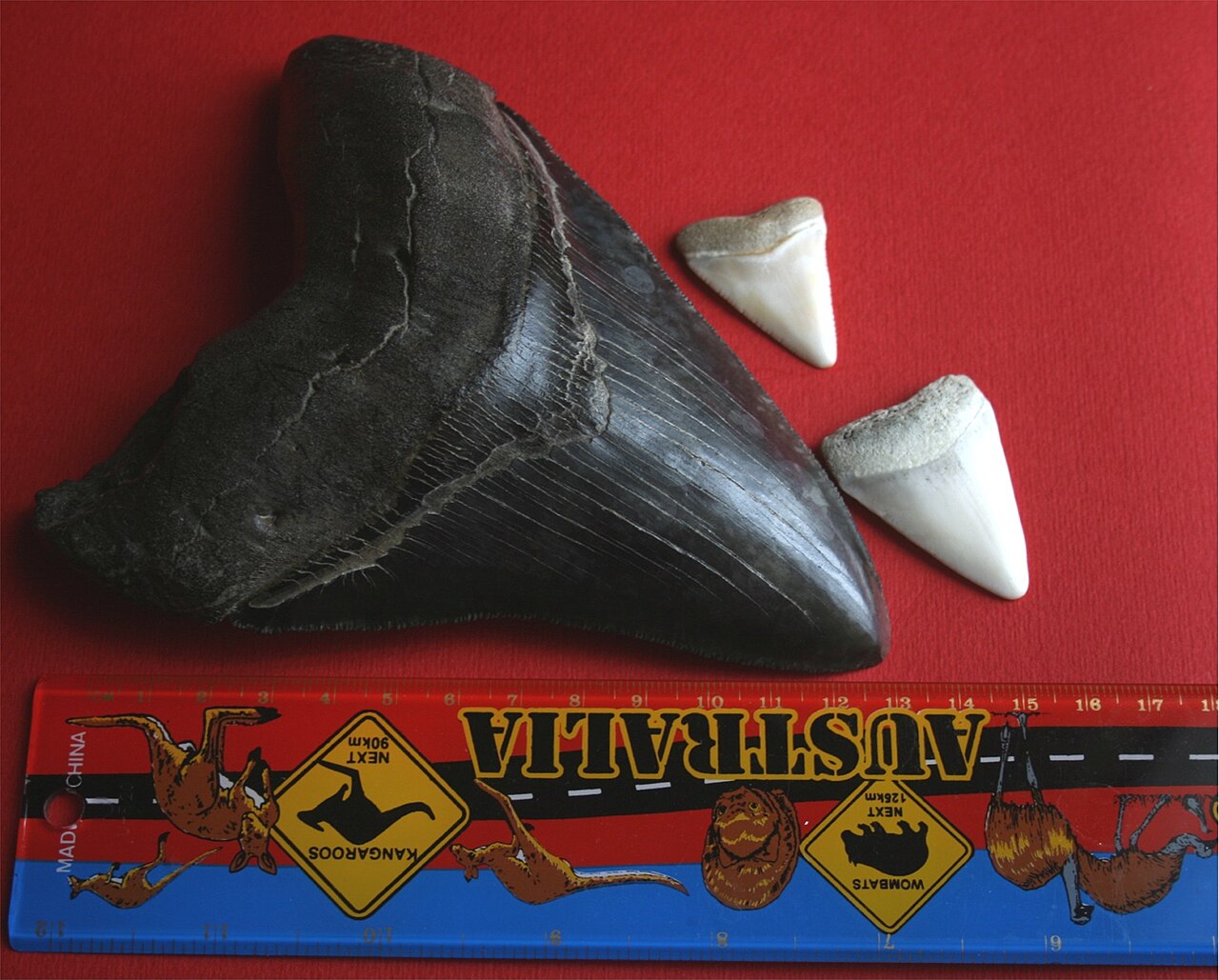
📷 Brocken Inaglory · CC BY-SA 3.0 · Commons
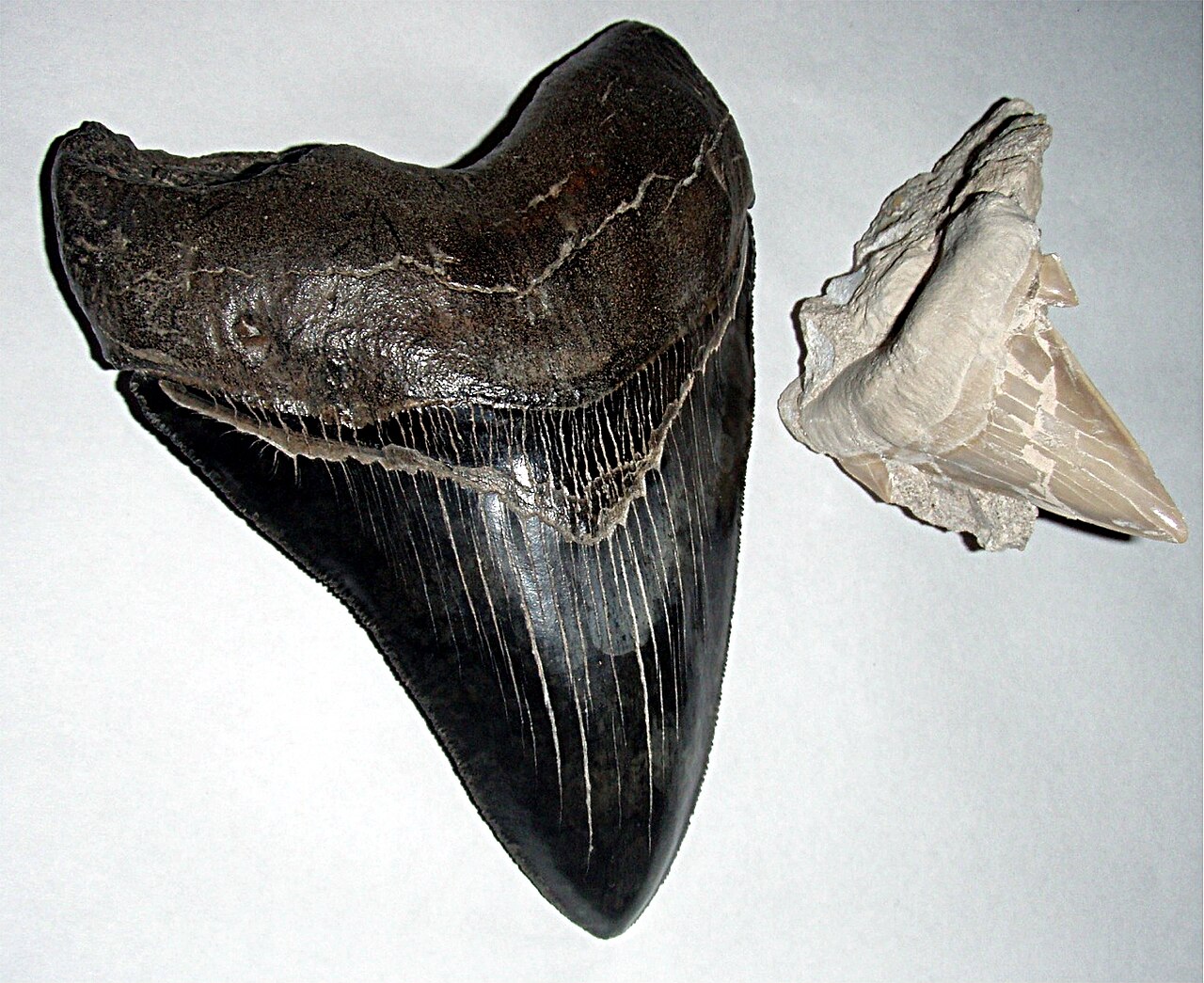
📷 Brocken Inaglory · CC BY-SA 3.0 · Commons
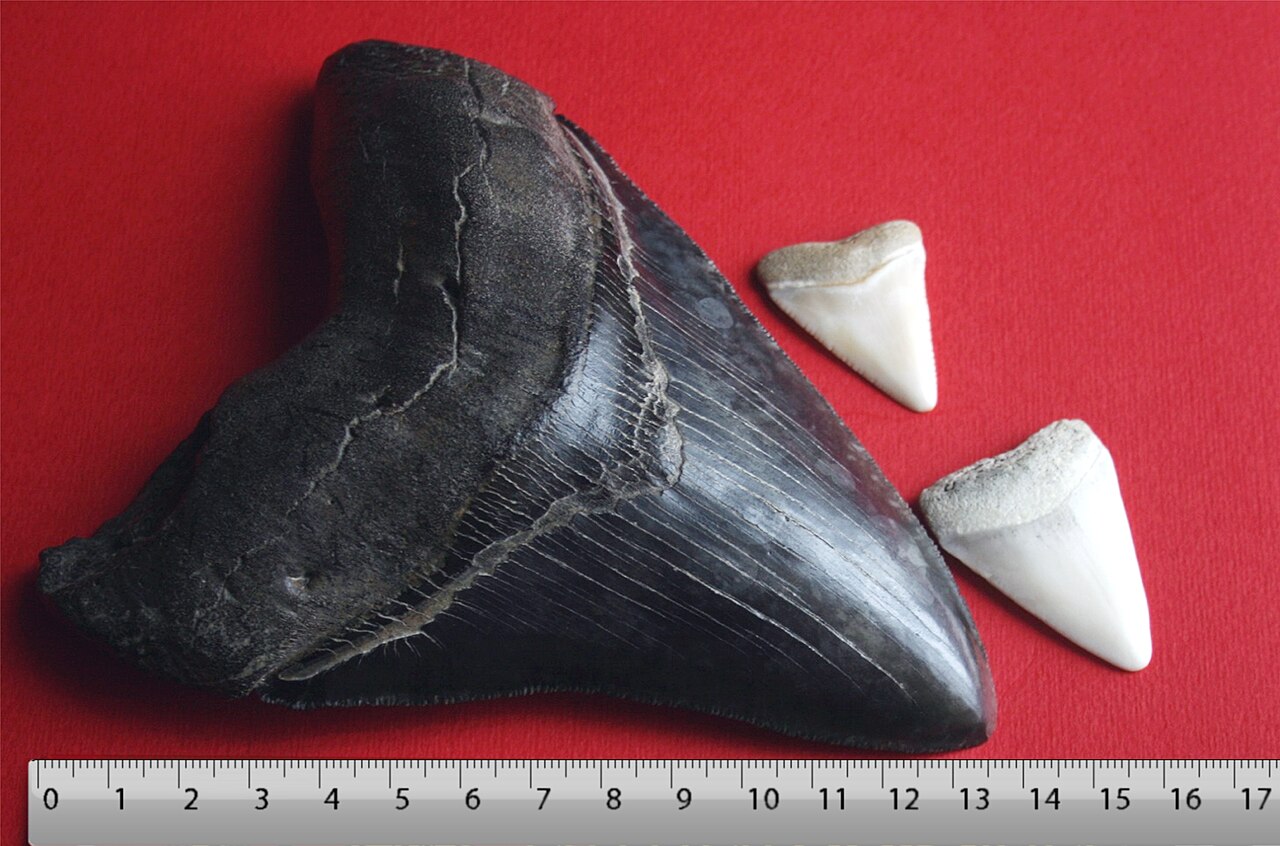
📷 Megalodon_tooth_with_great_white_sharks_teeth.jpg: Brocken Inaglory BlueRuler_36cm.png: User:Kalan derivative work: Parzi · CC BY-SA 3.0 · Commons
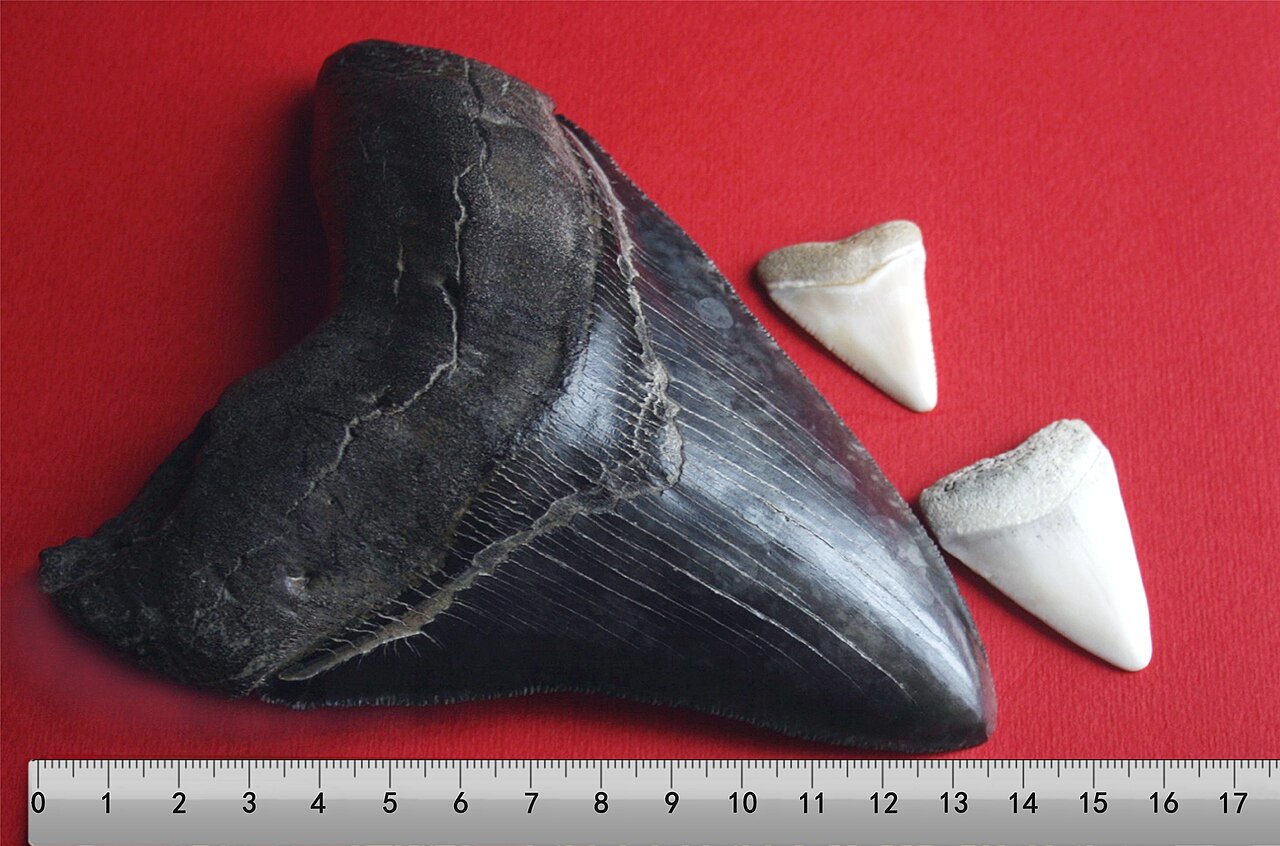
📷 Megalodon_tooth_with_great_white_sharks_teeth.jpg: Brocken Inaglory BlueRuler_36cm.png: User:Kalan derivative work: Parzi · CC BY-SA 3.0 · Commons
Often confused with
Best locations
Caspersen Beach (Venice)
Florida
Manasota Key Beach
Florida
Peace River (Arcadia stretch)
Florida
Aurora Fossil Museum Spoil Piles
North Carolina
Brownie's Beach (Bayfront Park)
Maryland
Matoaka Beach Cottages
Maryland
Edisto Beach State Park
South Carolina
Folly Beach
South Carolina
Sunset Beach / Bird Island (Brunswick County NC)
North Carolina